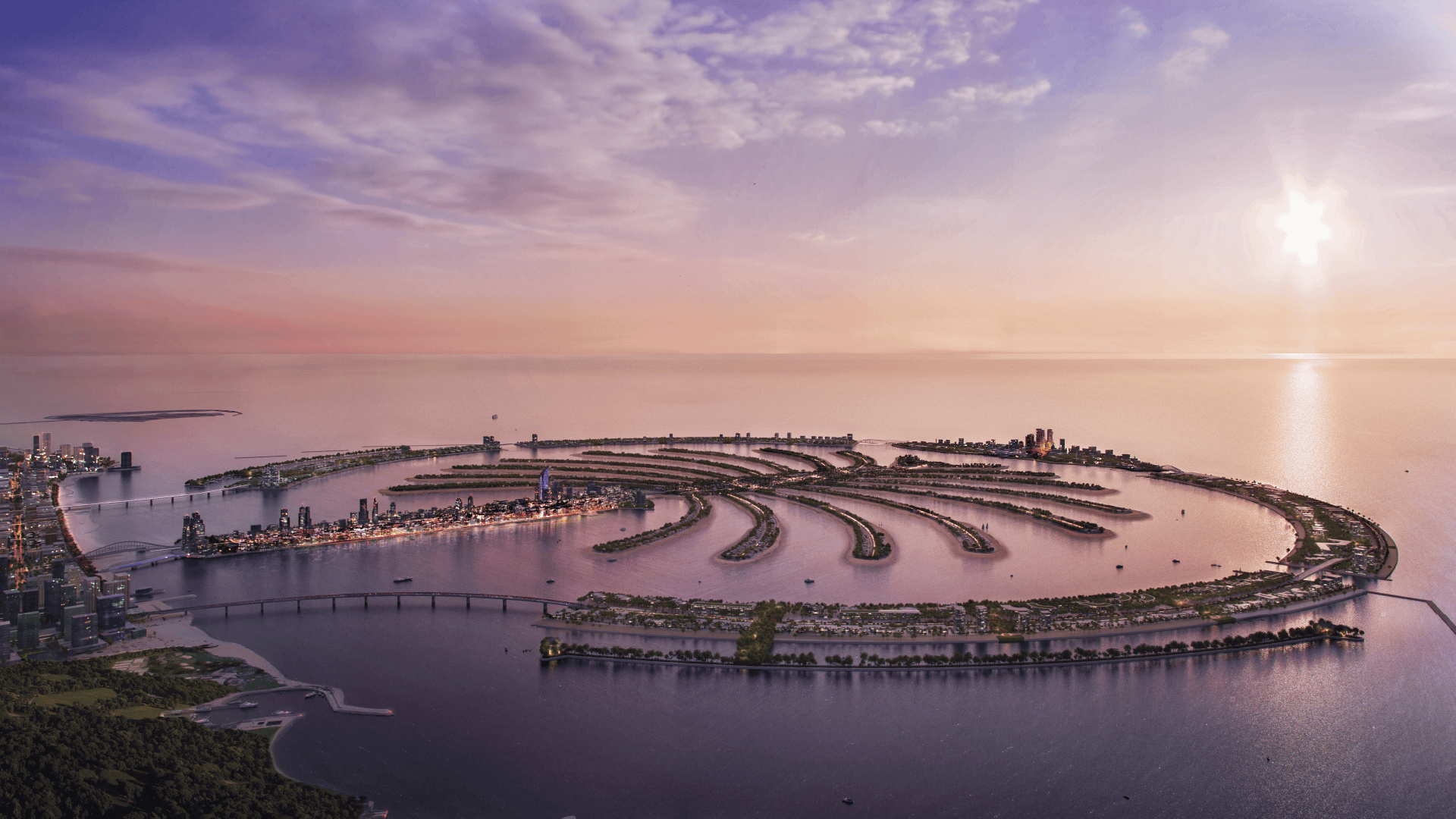
For a long time, Palm Jebel Ali felt like a concept that got left behind. People knew about it, of course—there were brochures, a few construction images, even stories from those who bought into it early. But as the years passed, it quietly slipped out of most conversations. Palm Jumeirah became the icon, and its younger, quieter sibling faded into the background. Until now.
The first time I drove out there again after the relaunch was announced, I wasn’t sure what to expect. The land was there, of course—it always had been, a massive shape resting just offshore. But what surprised me was the feeling. It didn’t feel like a restart. It felt like a return to something that had simply been waiting for the right moment.
Palm Jebel Ali today feels different from what it might have been back then. The tone has changed. It’s less about spectacle, more about vision. The scale is still ambitious, but there’s more thought behind it—more awareness of how people actually live now. Sustainability, walkability, the relationship between water and land, between private and public space—all of that seems to be shaping the new plan. It’s no longer just about luxury as image. It’s about how luxury feels when it lasts.
What makes it particularly interesting is how quietly confident the momentum feels. There’s no rush, no noise. Just measured progress, well-timed releases, and a sense that this time, it’s not about launching quickly—it’s about getting it right. That’s something I hear from buyers as well. Those considering the Palm now aren’t just looking for prestige. They’re looking for something long-term. A statement, yes—but one they’ll still believe in ten years from now.
I think part of the renewed interest also comes from a shift in Dubai itself. The city has matured. Buyers have matured with it. There’s less appetite for bold promises and more focus on execution. And Palm Jebel Ali fits into that new rhythm. It offers space. Distance. A sense of escape—without disconnecting entirely from the city’s pulse.
Walking along the reclaimed shore, I caught myself imagining what it’ll be like when it’s finished—not in the brochure version, but in real life. A morning with light over the water. Families walking along a quiet promenade. A marina with fewer yachts and more people who actually live nearby. It’s rare to feel something imagined becoming real in such a grounded way. But that’s what makes this place worth watching again.
Palm Jebel Ali isn’t a comeback. It’s a continuation. And this time, the timing feels right.
The first time I drove out there again after the relaunch was announced, I wasn’t sure what to expect. The land was there, of course—it always had been, a massive shape resting just offshore. But what surprised me was the feeling. It didn’t feel like a restart. It felt like a return to something that had simply been waiting for the right moment.
Palm Jebel Ali today feels different from what it might have been back then. The tone has changed. It’s less about spectacle, more about vision. The scale is still ambitious, but there’s more thought behind it—more awareness of how people actually live now. Sustainability, walkability, the relationship between water and land, between private and public space—all of that seems to be shaping the new plan. It’s no longer just about luxury as image. It’s about how luxury feels when it lasts.
What makes it particularly interesting is how quietly confident the momentum feels. There’s no rush, no noise. Just measured progress, well-timed releases, and a sense that this time, it’s not about launching quickly—it’s about getting it right. That’s something I hear from buyers as well. Those considering the Palm now aren’t just looking for prestige. They’re looking for something long-term. A statement, yes—but one they’ll still believe in ten years from now.
I think part of the renewed interest also comes from a shift in Dubai itself. The city has matured. Buyers have matured with it. There’s less appetite for bold promises and more focus on execution. And Palm Jebel Ali fits into that new rhythm. It offers space. Distance. A sense of escape—without disconnecting entirely from the city’s pulse.
Walking along the reclaimed shore, I caught myself imagining what it’ll be like when it’s finished—not in the brochure version, but in real life. A morning with light over the water. Families walking along a quiet promenade. A marina with fewer yachts and more people who actually live nearby. It’s rare to feel something imagined becoming real in such a grounded way. But that’s what makes this place worth watching again.
Palm Jebel Ali isn’t a comeback. It’s a continuation. And this time, the timing feels right.