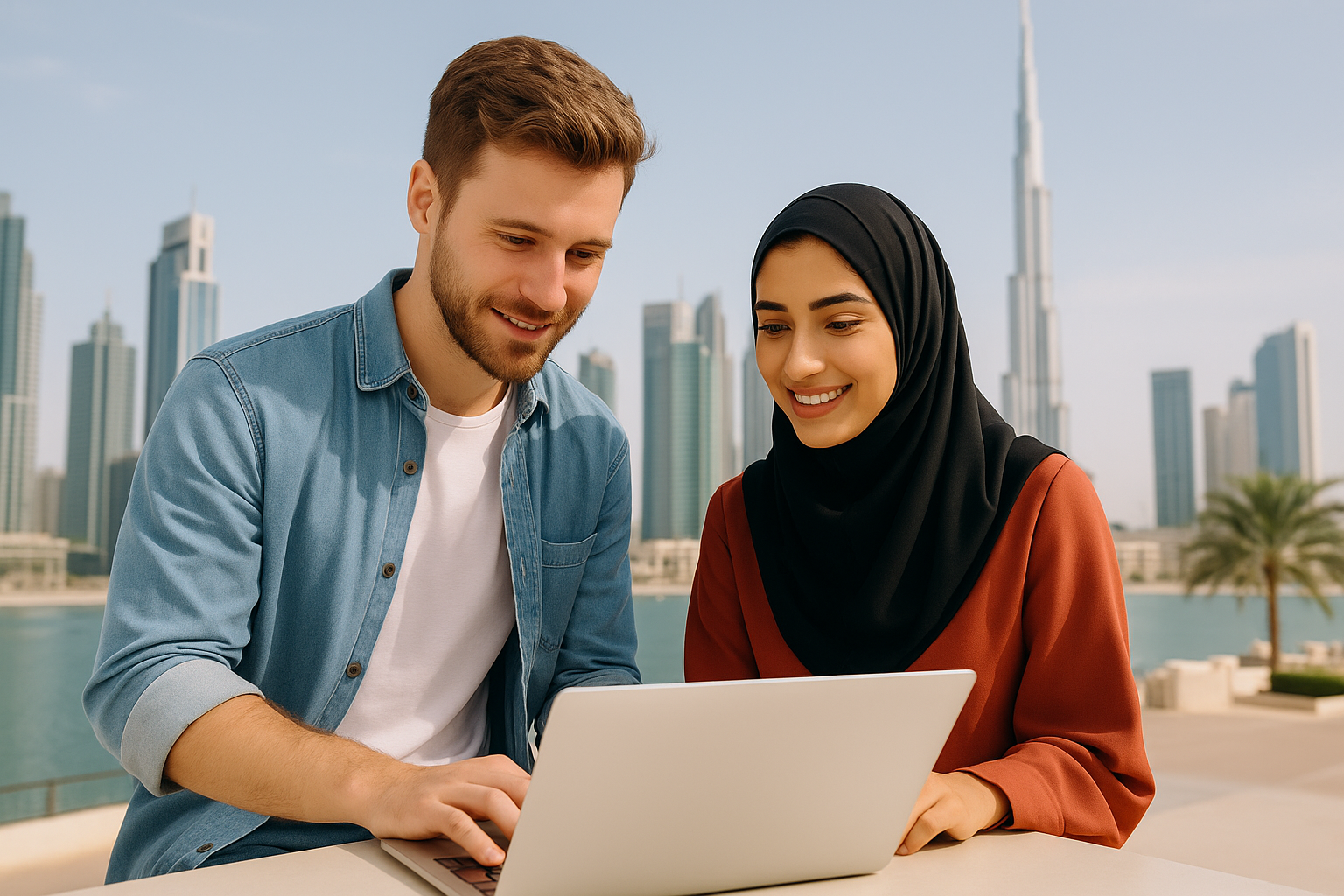
Over the past year, I’ve started hearing a different kind of accent at viewings. Not from high-net-worth investors or long-time expats, but from people who came “just to try it out.” Designers, developers, consultants, remote creatives—carrying laptops and curiosity. They arrive in the Gulf with a flexible visa, a few months on the calendar, and no clear plan. Some end up leaving. But more and more, some decide to stay.
It’s a shift I didn’t see coming at this scale. The region wasn’t historically seen as a nomad hub. For years, the lifestyle pointed to Bali, Lisbon, Tbilisi. Places with low cost of living and an easy-going atmosphere. The Gulf, by contrast, always felt more structured, more formal. But that perception is changing—and fast. Part of it is infrastructure. The Wi-Fi is excellent. Coworking spaces have multiplied. Transport is clean and efficient. And crucially, there’s now a visa framework designed to welcome this crowd, not just tolerate them. A remote worker landing in Dubai, Abu Dhabi, or even Ras Al Khaimah can secure a one-year residency with minimal bureaucracy. That makes a difference.
But the appeal isn’t just practical—it’s emotional. What surprises many newcomers is how livable the region is, day-to-day. The weather for half the year is ideal. Cafés are open late. Groceries arrive in 20 minutes. There’s a certain rhythm here—modern, well-paced, strangely easy to settle into. One conversation with someone who’s been here for six months often sounds very different from the one they had when they first landed. You hear it in the language: “I thought I’d stay a few weeks…” followed by “Now I’m thinking of getting something longer-term.”
Not everyone is buying property, of course. But a growing number are starting to look. What began as a flexible escape becomes a kind of base. A studio in Business Bay. A one-bedroom near the beach. Even short-term investors are paying attention to this group, because they’re often great tenants: responsible, digital-savvy, and happy to pay a premium for location and stability. In a way, they’re reshaping part of the rental market—not through volume, but through preference.
For cities in the Gulf, this shift is meaningful. It brings new energy, softer expectations, and fresh eyes. People come not because they have to, but because they choose to. They don’t require corporate relocation packages or long-term contracts. They’re here for the quality of life, the cultural mix, the speed and efficiency that the region is increasingly known for. And if the trend continues—and I believe it will—we’ll see more of them becoming semi-permanent residents, even owners.
What’s most interesting is that these new arrivals don’t follow the usual investor logic. They don’t ask about yields first. They ask about walkability, building management, where to get good coffee. That may sound small—but it’s changing how people think about value. Not just what the property gives back, but how it supports a certain kind of life.
For the Gulf, welcoming this crowd isn’t just about economic diversification or modern branding. It’s about embracing a more flexible way of living, working, and being in the city. And if the cities continue to respond with the same openness, I think this is just the beginning of a very different kind of real estate story.
It’s a shift I didn’t see coming at this scale. The region wasn’t historically seen as a nomad hub. For years, the lifestyle pointed to Bali, Lisbon, Tbilisi. Places with low cost of living and an easy-going atmosphere. The Gulf, by contrast, always felt more structured, more formal. But that perception is changing—and fast. Part of it is infrastructure. The Wi-Fi is excellent. Coworking spaces have multiplied. Transport is clean and efficient. And crucially, there’s now a visa framework designed to welcome this crowd, not just tolerate them. A remote worker landing in Dubai, Abu Dhabi, or even Ras Al Khaimah can secure a one-year residency with minimal bureaucracy. That makes a difference.
But the appeal isn’t just practical—it’s emotional. What surprises many newcomers is how livable the region is, day-to-day. The weather for half the year is ideal. Cafés are open late. Groceries arrive in 20 minutes. There’s a certain rhythm here—modern, well-paced, strangely easy to settle into. One conversation with someone who’s been here for six months often sounds very different from the one they had when they first landed. You hear it in the language: “I thought I’d stay a few weeks…” followed by “Now I’m thinking of getting something longer-term.”
Not everyone is buying property, of course. But a growing number are starting to look. What began as a flexible escape becomes a kind of base. A studio in Business Bay. A one-bedroom near the beach. Even short-term investors are paying attention to this group, because they’re often great tenants: responsible, digital-savvy, and happy to pay a premium for location and stability. In a way, they’re reshaping part of the rental market—not through volume, but through preference.
For cities in the Gulf, this shift is meaningful. It brings new energy, softer expectations, and fresh eyes. People come not because they have to, but because they choose to. They don’t require corporate relocation packages or long-term contracts. They’re here for the quality of life, the cultural mix, the speed and efficiency that the region is increasingly known for. And if the trend continues—and I believe it will—we’ll see more of them becoming semi-permanent residents, even owners.
What’s most interesting is that these new arrivals don’t follow the usual investor logic. They don’t ask about yields first. They ask about walkability, building management, where to get good coffee. That may sound small—but it’s changing how people think about value. Not just what the property gives back, but how it supports a certain kind of life.
For the Gulf, welcoming this crowd isn’t just about economic diversification or modern branding. It’s about embracing a more flexible way of living, working, and being in the city. And if the cities continue to respond with the same openness, I think this is just the beginning of a very different kind of real estate story.