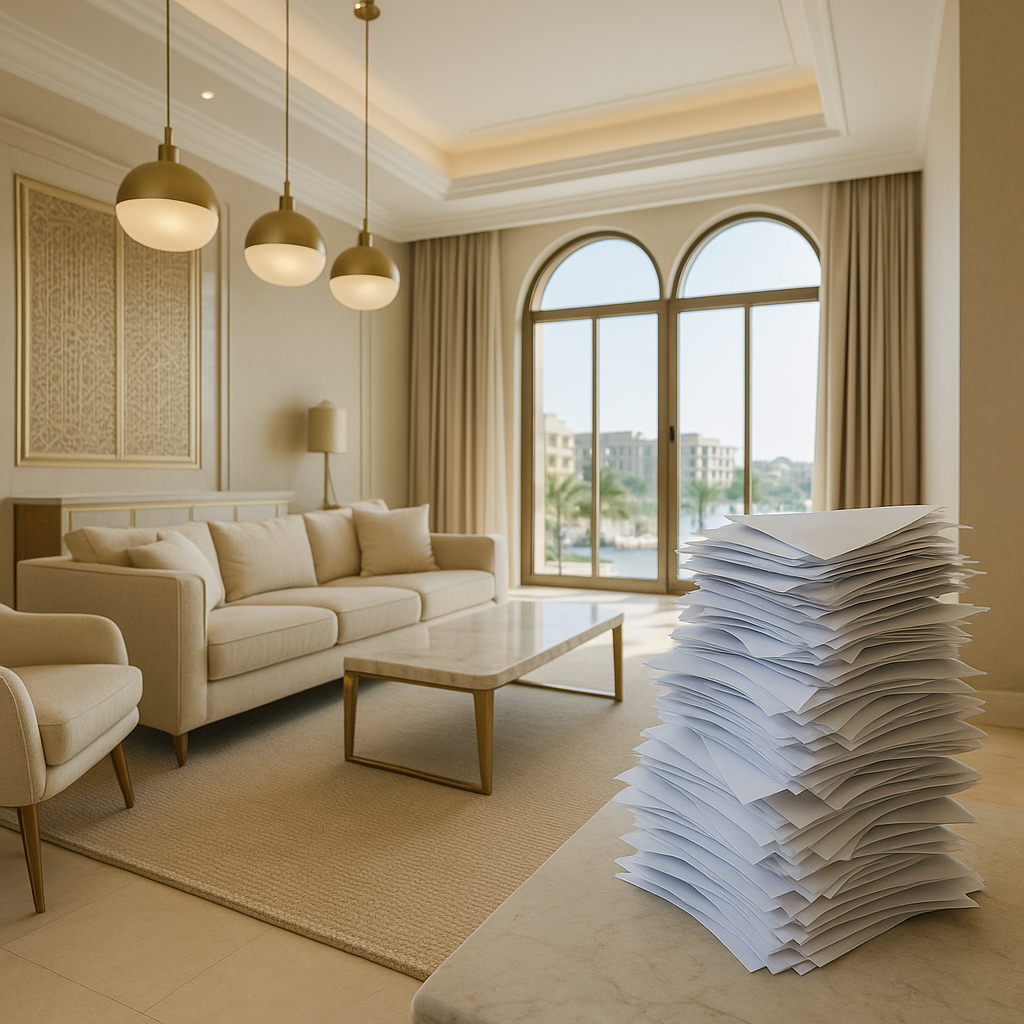
There’s a moment that almost always comes after a buyer decides to move forward with a property in the Gulf. It usually happens somewhere between signing the documents and receiving the keys. That moment when they say, “Wait… what’s this fee?” And to be honest, I understand the surprise. On paper, buying here seems refreshingly straightforward—no property tax, no capital gains tax, and, in many cases, full ownership even as a foreigner. But like anywhere else, the full picture includes a few extra lines.
Service charges are the first thing people tend to notice. These aren’t unique to the region, but the way they’re structured here can catch buyers off guard—especially if they’re used to markets where such costs are bundled or regulated differently. In many Gulf communities, these fees cover everything from building maintenance to landscaping and amenities, and they can vary widely depending on the development. A beachfront building with a pool, gym, and valet will naturally cost more to maintain than a quiet low-rise block. The key is understanding what you’re paying for and why.
Then there’s the cost of furnishing and fit-out. Off-plan buyers often overlook this entirely. The unit is brand new, yes—but it usually comes as a shell. Even in fully finished apartments, furnishing to a standard that matches the expectations of the rental market—or simply your own taste—takes more thought and budget than many anticipate. This isn't a downside, just a step that needs planning. I’ve seen owners rush into quick, low-cost furniture packages only to quietly replace half of it a year later.
Ownership also comes with the usual responsibilities that rarely make it into glossy brochures: building insurance, air conditioning maintenance (especially relevant in the Gulf’s climate), and basic upkeep. If you're renting it out, there's property management to consider—and if you're not using a management company, then your time becomes the hidden cost. Answering tenant calls about plumbing issues or chasing payments is real work, even with the region’s generally smooth rental processes.
Still, the biggest “cost” of ownership here may not be a financial one at all—it’s the mental shift required. In a market that moves quickly, where new projects launch with bold promises and returns are often discussed before the foundations are even laid, staying grounded takes discipline. It’s easy to chase the shiny. But real ownership, especially for the long term, means focusing on value, livability, and consistency. It’s about understanding that this isn’t a quick trade—it’s a real asset.
And yet, for all these additional costs—visible and invisible—I’ve rarely met owners who regret the decision. There’s something about holding a tangible piece of this region’s growth that adds perspective. A home that appreciates slowly but steadily, or an apartment that’s rented out to the same tenant for three years without a single issue, carries its own quiet reward. These aren’t headlines, but they are real.
The Gulf doesn’t pretend to be cheap. But when you add it all up—stability, lifestyle, absence of certain taxes, global accessibility—the cost of ownership here still feels like a fair trade. And in many cases, a smart one.
Service charges are the first thing people tend to notice. These aren’t unique to the region, but the way they’re structured here can catch buyers off guard—especially if they’re used to markets where such costs are bundled or regulated differently. In many Gulf communities, these fees cover everything from building maintenance to landscaping and amenities, and they can vary widely depending on the development. A beachfront building with a pool, gym, and valet will naturally cost more to maintain than a quiet low-rise block. The key is understanding what you’re paying for and why.
Then there’s the cost of furnishing and fit-out. Off-plan buyers often overlook this entirely. The unit is brand new, yes—but it usually comes as a shell. Even in fully finished apartments, furnishing to a standard that matches the expectations of the rental market—or simply your own taste—takes more thought and budget than many anticipate. This isn't a downside, just a step that needs planning. I’ve seen owners rush into quick, low-cost furniture packages only to quietly replace half of it a year later.
Ownership also comes with the usual responsibilities that rarely make it into glossy brochures: building insurance, air conditioning maintenance (especially relevant in the Gulf’s climate), and basic upkeep. If you're renting it out, there's property management to consider—and if you're not using a management company, then your time becomes the hidden cost. Answering tenant calls about plumbing issues or chasing payments is real work, even with the region’s generally smooth rental processes.
Still, the biggest “cost” of ownership here may not be a financial one at all—it’s the mental shift required. In a market that moves quickly, where new projects launch with bold promises and returns are often discussed before the foundations are even laid, staying grounded takes discipline. It’s easy to chase the shiny. But real ownership, especially for the long term, means focusing on value, livability, and consistency. It’s about understanding that this isn’t a quick trade—it’s a real asset.
And yet, for all these additional costs—visible and invisible—I’ve rarely met owners who regret the decision. There’s something about holding a tangible piece of this region’s growth that adds perspective. A home that appreciates slowly but steadily, or an apartment that’s rented out to the same tenant for three years without a single issue, carries its own quiet reward. These aren’t headlines, but they are real.
The Gulf doesn’t pretend to be cheap. But when you add it all up—stability, lifestyle, absence of certain taxes, global accessibility—the cost of ownership here still feels like a fair trade. And in many cases, a smart one.